Paint coverage area: measure walls and plan how much to buy
Measure paint coverage area in square metres, account for openings and coats, then check the tin's stated coverage before buying.
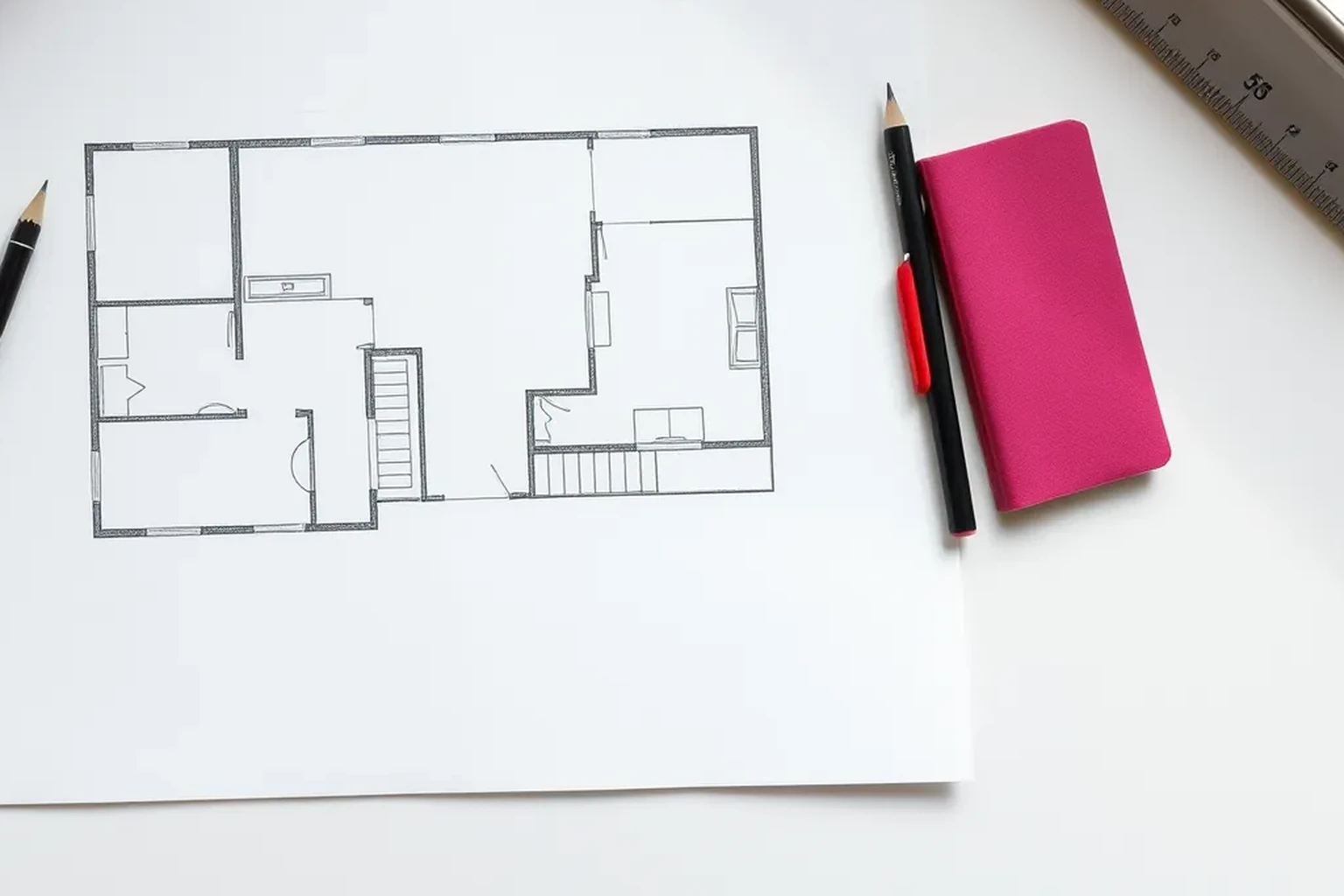
Measure each surface in metres and calculate its area in square metres. Adjust for large openings, multiply by the number of coats, then divide by the coverage stated on the chosen paint tin and round up to an available size.
What paint coverage area means
Paint coverage area is the surface you intend to coat, measured in square metres (m²). For a rectangular wall, multiply its width by its height; for a ceiling, multiply its length by its width. Keep walls, ceilings and woodwork on separate lists if they need different paints. The room's floor area alone will not tell you how much wall paint to buy.
A tin's stated coverage usually describes how much surface one litre can cover under the conditions specified by its manufacturer. It is a planning figure, not a promise that every wall will use exactly that amount. Surface texture, absorbency, preparation and application can change the quantity needed. Read the label for both coverage and the recommended number of coats before calculating litres.
1. Measure the surfaces
Sketch the room and label each wall so you can match every measurement to a surface. Use a tape measure to record lengths and heights in millimetres, then divide each figure by 1,000 to convert it to metres. For example, 3,600 mm becomes 3.6 m. Measure the wall height where you will actually paint, from the top of the skirting to the ceiling or other stopping point.
Measure each wall separately if the room is irregular, rather than assuming opposite walls match. Split an L-shaped wall or a sloping section into simple rectangles or triangles and calculate each part. Note alcoves and chimney breasts as extra faces to measure; their side surfaces are easy to miss. Check your sketch against the room before putting the tape away.
- Record widths and heights in mm.
- Convert every measurement to metres before multiplying.
- List ceilings, walls and trim separately.
- Measure recesses and projections as additional surfaces.
2. Calculate and check the gross area
Multiply width by height for each rectangular wall, then add the wall areas together. In a simple rectangular room, you can cross-check the total with the perimeter method: twice the length plus twice the width, multiplied by wall height. Both methods should give the same gross wall area when every wall has the same height. If they disagree, revisit the dimensions or look for a surface missing from your sketch.
Calculate a ceiling separately by multiplying room length by room width. If a ceiling slopes, measure its sloping surface rather than using only the floor dimensions. Keep the arithmetic in m² and retain at least two decimal places while working. Rounding each measurement too early can make the final paint estimate less reliable.
3. Account for doors, windows and unpainted areas
Measure the width and height of each substantial opening that will not be painted, then subtract its area from the relevant wall. Include a door only to the extent that its opening removes wall surface; the door itself needs a separate calculation if you plan to paint it. Treat a large built-in wardrobe or permanently covered wall in the same way. Write down each deduction so you can review it later.
Small openings need judgement because painting around edges, reveals and frames can use paint that a simple subtraction ignores. If you will paint a window reveal or an alcove side, add that surface back as its own rectangle. Do not subtract a temporary obstruction such as a sofa, which will be moved before decorating. The result is your estimated net area for that paint and surface.
4. Allow for coats and check the tin
Multiply the net area by the number of full coats you intend to apply. This gives the total area to be covered across all coats, which is different from the physical size of the walls. Divide that figure by the chosen paint's stated coverage in m² per litre to estimate litres. Use the figure on the specific tin or its technical information, since products and surfaces differ.
Check whether the stated coverage applies to the surface and application method you have planned. Bare plaster, repairs and strong colour changes may need a separate preparation product or a different number of coats; follow the product instructions. Calculate primer separately using its own coverage figure. Do not treat a primer coat as a coat of finish paint when working out the finish-paint quantity.
5. Choose a purchase quantity
Compare the calculated litres with the tin sizes actually available for your chosen paint. Round up to a quantity you can buy, rather than rounding the calculation down to the nearest litre. For a rough or absorbent surface, leave a modest allowance based on a test area or the product guidance. A small test patch can also show whether the planned number of coats gives the finish you need.
If several rooms will use the same product and colour, add their paint requirements before choosing tin sizes. Keep different finishes, colours and batches separate in your notes so you do not accidentally combine incompatible quantities. Check the retailer's returns policy before buying more than you expect to use. Store any leftover paint according to its label for later touch-ups.
Final verification checklist
Walk around the room with your sketch and confirm that every painted face appears once. Check the units on your notes: dimensions should be in metres for the area calculation, and the resulting areas should be in m². Recalculate one wall from its original mm measurements to catch a conversion error.
Match each total to the correct paint tin, its stated m²-per-litre coverage and the planned number of coats. Confirm that openings were deducted only where no paint will go, and that reveals or other extra faces were included. Finally, check that the quantity you intend to buy meets or exceeds the calculated litres.
- Every painted surface is listed once.
- Measurements were converted from mm to m.
- Openings and extra faces were checked.
- Coats and tin coverage match the chosen product.
- Available tin sizes cover the calculated litres.
Reproducible worked record
Illustrative rectangular room wall calculation
All room dimensions, openings, coat counts and paint coverage figures below are illustrative, not measured or product-specific.
- Room length, width and wall height
- 4.2 m, 3.3 m and 2.4 m
- Unpainted openings
- Two doors, each 0.8 m × 2.0 m; one window, 1.2 m × 1.1 m
- Finish coats
- 2
- Assumed paint coverage
- 10 m² per litre per coat, illustrative only; check the chosen tin
Wall perimeter = 2 × (4.2 + 3.3) = 15 m. Gross wall area = 15 × 2.4 = 36 m². Openings = 2 × (0.8 × 2.0) + (1.2 × 1.1) = 4.52 m². Net wall area = 36 − 4.52 = 31.48 m². Two coats = 31.48 × 2 = 62.96 m². Estimated paint = 62.96 ÷ 10 = 6.296 litres.The illustrative estimate is about 6.3 litres of finish paint before choosing available tin sizes or allowing for the actual surface.
Verification boundaryRemeasure the walls and openings, then replace the assumed 10 m²-per-litre figure with the coverage stated for the selected paint.
References and field record
Check the assumptions at their source.
NIST's SI unit guidance supports expressing the calculated surface area in square metres; the illustrative paint coverage is an assumption, not a NIST figure.
- NISTIdentifies the square metre as the SI derived unit of area.The International System of Units (SI): SI derived units
References checked August 6, 2026. External specifications can change; verify the current document before relying on a product or regulated dimension.
Scope and limitations
This note helps householders organise measurements and understand the calculation. It does not replace an on-site decision by a designer, installer, contractor, or manufacturer. Fabrication, structure, electrical work, gas, waterproofing, and personal safety require suitably qualified verification.