How to Measure Curtains: A Practical UK Guide
Learn how to measure curtains in millimetres for poles, tracks, recesses and drops, with checks for fullness, lining and fitting clearance.
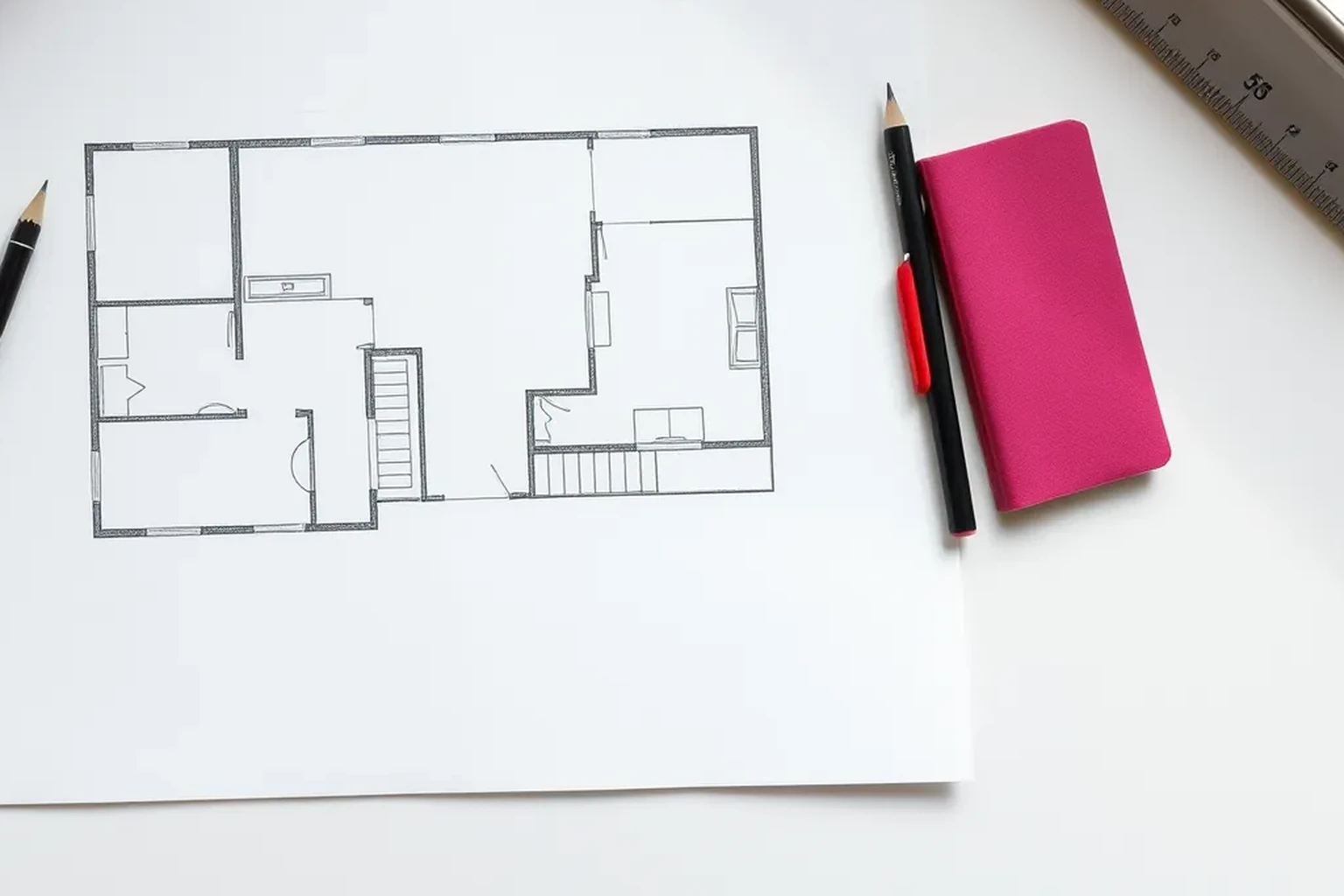
Measure the fitting and the window separately, then decide whether the curtains will sit inside the recess or extend beyond it. Record several width and drop measurements in millimetres, use the smallest relevant measurement where a surface is uneven, and apply the curtain heading or supplier's fullness requirement before ordering.
How to measure curtains: identify the fitting first
Start by identifying what will carry the curtains: a pole with rings, a pole designed for eyelets, a standard curtain track, a bay window track or a specialist wave-style track. Measure the installed fitting where possible, rather than estimating from the glass or frame. If the fitting has not been installed, mark its intended position and check the manufacturer's fixing and clearance instructions before taking final measurements.
Decide whether the curtains will cover the window recess or hang outside it. An inside-recess arrangement fits between the reveal surfaces and needs precise measurements, while an outside-recess arrangement normally allows the fabric to overlap the wall around the window. Check for radiators, handles, shutters, window vents, picture rails and furniture that could affect the curtain's path or the position of the pole or track.
Use a rigid steel tape and record every dimension in millimetres, writing the unit beside each number. Take measurements with the tape level and straight, and do not rely on a single reading in an older or uneven room. Keep a simple measurement sheet showing the room, window, fitting type, width, drop and any deductions or allowances.
- Fitting type: pole, track, bay track, wave track or other system
- Mounting position: inside recess or outside recess
- Obstructions: handles, radiators, vents, shutters and furniture
- Units: millimetres, with measurements labelled clearly
Measure the curtain width
For a curtain pole, measure the usable pole length between the points where the curtain fabric will stop, usually between the finials or between the end stops. Do not automatically include decorative finials unless the curtains are intended to travel over them. For a standard track, measure the track from end to end, including any designed overlap in the centre if the track has one.
If the track or pole is not installed, measure the planned span from the left curtain position to the right curtain position. An outside-recess fitting commonly extends beyond the window so the fabric can cover the frame when closed, but the exact extension depends on wall space, the fitting and the chosen look. For a recess fitting, measure the recess width at the top, middle and bottom and use the narrowest usable result.
Width is the width of fabric required across the whole window, not necessarily the width printed on a ready-made curtain package. Apply the fullness or gather requirement for the chosen heading and fabric, then divide the total finished width between the curtains if ordering a pair. Ask the supplier whether a stated ready-made width describes one curtain or the pair, because product conventions can differ.
- Pole: measure the curtain-running length, not automatically the finials
- Track: include the track's intended overlap where applicable
- Recess: take three width readings and use the smallest usable width
- Confirm whether a quoted curtain width is per curtain or per pair
Measure the curtain drop
Measure the drop from the point where the curtain will hang, such as the top of the track, the curtain ring position or the eyelet's intended running point. The correct starting point varies by fitting and heading, so check the heading instructions before finalising the number. For a pole with rings, measure from the bottom of the ring or from the specified hook position rather than assuming the top of the pole is the fabric start.
Take the drop at the left, centre and right of the window or fitting. For a recess curtain, use the shortest usable drop if the sill or floor is uneven, then allow the clearance recommended for the chosen finish. For a floor-length curtain outside the recess, decide whether the fabric should finish just above the floor, meet the floor, or form a deliberate break, and state that choice to the maker.
Ready-made curtains often use standard drop labels, but the actual finished drop and heading construction still need checking. For eyelet curtains, measure from the top of the eyelet or the specified pole position according to the retailer's instructions. For pencil pleat or pinch-pleat curtains, confirm whether the quoted drop is measured from the top of the tape, from the hook position or from another reference point.
- Measure from the actual hanging point for the selected heading
- Take left, centre and right drop readings
- Use the shortest usable drop where the floor or sill is uneven
- Record the intended finish: sill, below sill, apron, floor or another position
Allow for fullness, overlap and returns
Curtain fabric usually needs more width than the pole or track because the heading gathers or pleats the material. The required amount is not universal: it depends on the heading style, fabric weight, track or pole system and the supplier's instructions. Use the stated fullness factor when one is provided, rather than selecting a factor based only on the window size.
A pair of curtains may also need a centre overlap so that daylight is not left between the two panels when they are closed. Some tracks include an overlap arm or carrier, while other systems require the overlap to be built into the curtain heading. Outside-recess curtains can also need a return, which is the amount of fabric that turns back from the front edge towards the wall or fitting.
Ask the curtain maker or retailer to confirm the finished width, number of panels, centre overlap and return before ordering. For a bay window, measure each track or pole section and identify where the curtains will stack; a single straight width may not describe how the fabric will actually travel. Keep the supplier's written calculation with your measurements so a later alteration can be checked against the original specification.
- Record the heading style and the supplier's fullness requirement
- Check whether a centre overlap is already included in the fitting
- Measure or specify returns where the curtain turns towards the wall
- For bays, record each section and the intended stacking positions
Check UK fittings and practical clearances
Common UK arrangements include extendable curtain poles, poles with rings, eyelet poles, pencil-pleat curtains on tracks and bay-window systems. An extendable pole should be measured at its installed setting, because the overlap between its sections can affect where rings travel. Check that brackets, gliders, rings and the curtain heading are compatible before treating the fitting measurement as final.
Look at the opening and the room as a complete installation. A handle can catch a lining, a radiator can push fabric forward, and a deep sill can alter an inside-recess drop. Check that the planned pole or track will not obstruct a window's opening, and follow the fitting manufacturer's instructions for fixing positions and support brackets.
For lined, interlined or blackout curtains, allow for the fact that the finished fabric may be heavier and less flexible than an unlined sample. The measurement does not by itself confirm that a wall, ceiling or plasterboard fixing will carry the fitting. Where the fitting is large, heavy or being fixed to an uncertain surface, obtain appropriate installation advice before ordering the final curtain.
- Confirm compatibility between the heading and pole, track, rings or gliders
- Check handles, sills, radiators, shutters and window opening movement
- Measure an extendable pole at its final installed length
- Consider the weight and movement of lined or interlined curtains
Work through an illustrative width calculation
Use a visible calculation so another person can audit the order. First write down the usable fitting width, then the fullness instruction, then the number of curtain panels. The calculation should describe the fabric width required across the whole fitting before any supplier-specific allowances are applied.
The example below is synthetic and uses an illustrative fullness requirement supplied for this example. It is not a recommended universal fullness factor and does not replace the instructions for a particular heading or fabric. If the supplier quotes finished panel widths differently, use the supplier's format and ask them to confirm the total coverage.
After calculating the fabric requirement, compare it with the available fabric width, pattern repeat and any joining or seam plan. A patterned fabric may require extra material to match the design, while a ready-made product may already have the heading and fullness built in. Keep the calculation alongside the order confirmation rather than relying on memory.
- Fitting width x stated fullness = total fabric width
- Total fabric width divided by panel count = approximate width per panel
- Confirm overlap, returns, pattern matching and heading construction separately
- Treat all example numbers as illustrative until checked with the supplier
Make a final measurement record before ordering
Create one record for each window, even when several windows appear identical. Include the room, window reference, fitting type, fitting width, three drop readings, selected finished drop, heading, panel count and whether the measurement is recess or outside recess. Add a small sketch showing the left and right ends, centre opening, overlap and stack direction.
Read the measurements back against the actual room before placing the order. Check that width belongs to the fitting rather than the glass, that the drop starts at the correct hanging point, and that any deductions or allowances are written as arithmetic. If a supplier changes a measurement into centimetres or metres, compare the converted value with the original millimetre record.
Send the record to the supplier and ask for the final specification to be confirmed in writing. The confirmation should identify the finished width and drop for each panel, the heading, lining, overlap, returns and any pattern-matching requirement. Keep the confirmation with invoices, product details and later care information as part of the household record.
- Label every measurement with the room and window
- Record raw readings separately from deductions and finished dimensions
- Check the hanging reference point and panel count
- Obtain the supplier's written final specification
Final verification checklist
Before ordering, repeat the critical measurements rather than checking only the written totals. Compare the second readings with the original record and investigate any difference that could change the fitting or finished curtain size. This is especially important for recesses, bays, sloping floors and extendable poles.
The final check should confirm the physical fitting, the fabric calculation and the order description. Keep the evidence of the check with the household records so replacement curtains can be measured against the same reference points. Do not approve the order until the supplier's interpretation of width, drop and panel count is clear.
- Fitting width measured in millimetres and checked twice
- Recess widths and drops taken at three points where relevant
- Hanging point, finished drop, heading and panel count confirmed
- Fullness, overlap, returns and pattern matching checked
- Supplier's written specification matches the measurement record
Reproducible worked record
Illustrative paired-curtain width calculation
All numbers in this worked example are explicitly illustrative and synthetic, used only to show how to check the arithmetic.
- Usable pole width
- 1800 mm
- Supplier-stated fullness for this example
- 2.0 times
- Number of curtain panels
- 2
1800 mm x 2.0 = 3600 mm total fabric width; 3600 mm / 2 panels = 1800 mm illustrative fabric width per panelThe check confirms that the two illustrative panels together provide 3600 mm of fabric width before any separately specified centre overlap, returns, pattern matching or heading construction allowances.
Verification boundaryRe-measure the installed pole or track, confirm the supplier's fullness and panel-width convention, then ask the supplier to reconcile the arithmetic with the final written order specification.
References and field record
Check the assumptions at their source.
Recording dimensions in millimetres and showing the arithmetic makes the measurement record auditable, consistent with authoritative guidance on SI units and UK metric measurement practice.
- NISTSupports the use and interpretation of SI units and metric prefixes when recording millimetre measurements.SI Units
- UK govProvides UK government guidance on regulated measurement and metric units used in trading contexts.Weights and measures: the law
References checked August 6, 2026. External specifications can change; verify the current document before relying on a product or regulated dimension.
Scope and limitations
This note helps householders organise measurements and understand the calculation. It does not replace an on-site decision by a designer, installer, contractor, or manufacturer. Fabrication, structure, electrical work, gas, waterproofing, and personal safety require suitably qualified verification.